
The Importance of a Funeral
Why We Have Had Funerals Since the Beginning of Time
For centuries, funerals have helped us say goodbye and on and remember the ones who died. The funeral ceremony serves to help our loved ones meet deep emotional and spiritual needs. The multicolored pyramid to the right provides a visual ear illustration of those needs starting with the most basic need (Reality) and moving upward toward the most significant (Transcendence).
REALITY
Funerals help us begin to acknowledge the reality that someone in our life has died.
RECALL
Funerals encourage us to remember the person who died and share our unique memories with others, creating hope for the future.
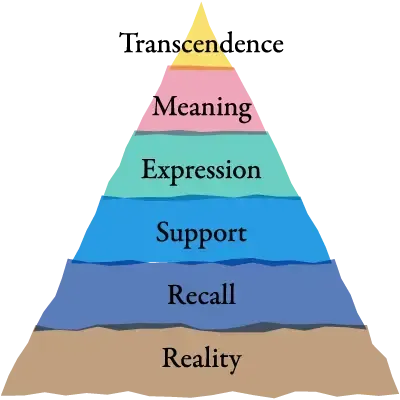
SUPPORT
Funerals bring together people who care about each other in an atmosphere of love and support.
EXPRESSION
Funerals allow us to express our inner thoughts and feelings about the life and death of a loved one.
MEANING
Funerals mark the significance of the life that was lived They also help us find meaning and purpose in our continued living. Even in the face of loss.
TRANSCENDENCE
Ultimately, funerals help us embrace the wonder of life and death.
Planning a Funeral is a Gift
As you consider planning ahead for a funeral, know that what you are doing is a gift that can have a lasting, and profoundly important impact on the lives of those who love you most. A meaningful funeral experience brings a sense of hope and a feeling of gratitude for life, love, and memories. So what creates a meaningful funeral experience? There are several significant elements or pieces of a funeral. Blending these pieces together allow reflects your unique life and allows your loved ones to have their needs met. Through a meaningful funeral ceremony. Thoughtfully combining these elements creates a transformative experience for your loved one as they remember and honor the life you lived.
MUSIC
Music that has personal meaning to you or the person who died, expresses what words alone could never say.
READINGS
Poems, spiritual or religious verses, and passages from meaningful texts offer words of comfort and support.
VISITATION/RECEPTION
A gathering before the funeral is a time for mourners to greet one another. If the body is present, it is also a chance to acknowledge the reality of the death, and say final goodbyes.
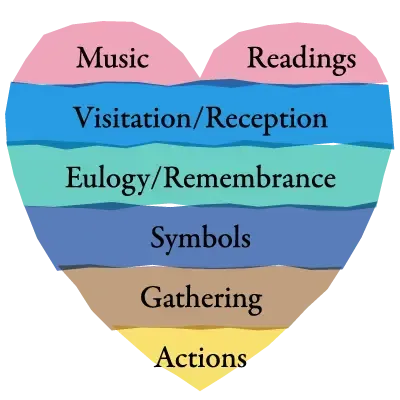
EULOGY/REMEMBRANCE
This tribute recalls and celebrates the life story of the person who died, gives voice to our inner thoughts and feelings about this person and helps us begin to embrace meaning of this unique life.
SYMBOLS
Objects such as displayed belongings of the person who died, crosses, or other religious items, candles, and flowers, give concrete form. To our search for meaning in life and death.
GATHERING
After the funeral, mourners gather to share memories, express what's on their minds and in their hearts, and support one another. Bonds are often strengthened and mourners return home with a sense of community and love.
ACTIONS
Funerals give mourners the opportunity to do something with their thoughts and feelings, such as lighting a candle, placing flowers on the casket, or participating in the procession to the ceremony.
Remember...
Generally, the more elements you can incorporate into a funeral, the more meaningful and healing it will be. Together, the elements are greater than the sum of their parts. When people in ceremony come together, meaning emerges and healing begins. If you have been to a special birthday party, wedding, or funeral, you've experienced the magic of ceremony. Now you have all the tools you need to plan an element rich funeral.
For more information on end of life planning, visit
funeralbasics.org.
About Doctor Alan Wolfelt
Alan D. Wolfelt Ph.D., is a respected author and educator on the topic of grief. He believes that meaningful funeral experiences help families and friends support one another, embrace their feelings, and embark on the journey to healing and transition.
Recipient of the Association of Death Education and Counseling's Death Educator Award, Doctor Wolfelt presents workshops across the world to grieving families, funeral home staffs, and other caregivers. He also teaches training courses for bereavement caregivers, at the Center for Loss and Life Transition in Fort Collins, Colorado where he serves as director. Doctor Wolfelt is on the faculty the University of Colorado Medical School's department of Family Medicine. He is also the author of many bestselling books, including Understanding Your Grief, The Mourner’s Book of Hope, and Creating Meaningful Funeral Ceremonies. For more information, visit
www.centerforloss.com.